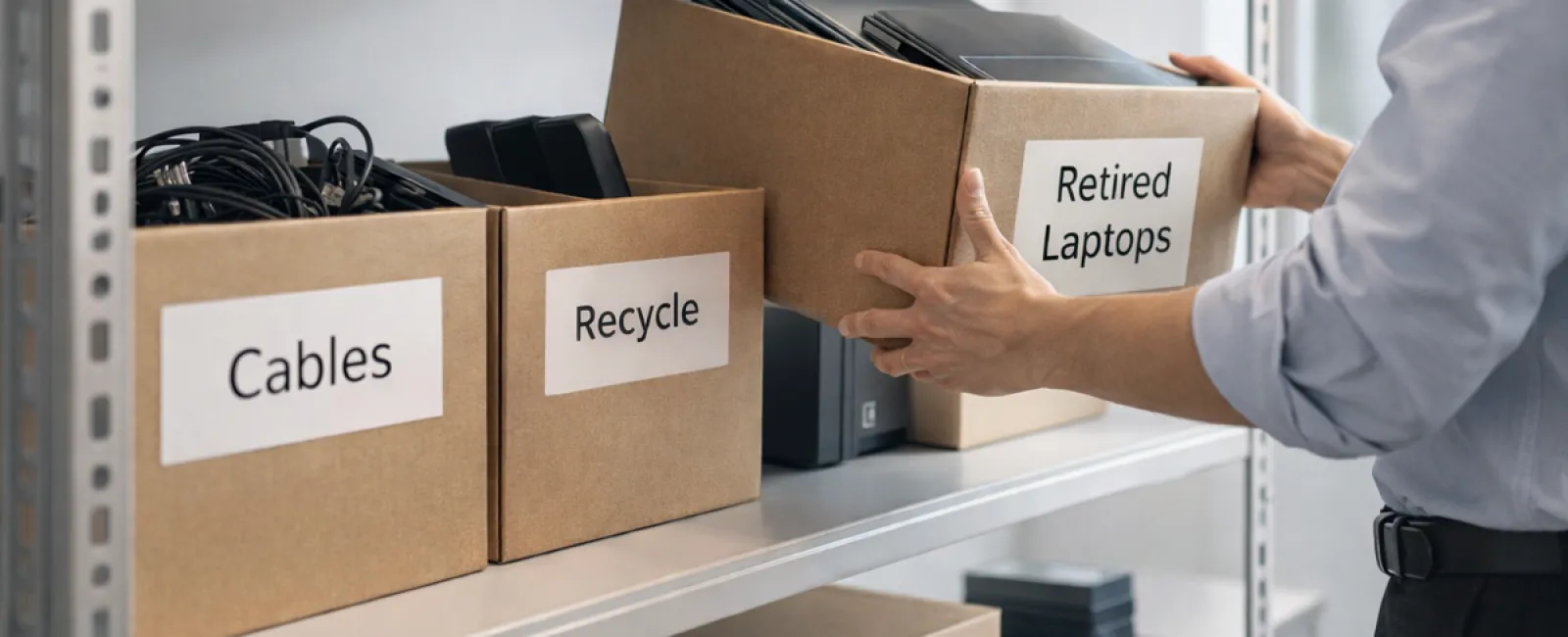
While spring cleaning often begins with tidying up closets, the real challenge for most businesses is dealing with accumulated tech clutter.
This clutter might be residing in server racks, storage rooms, back offices, or piles marked "we'll handle later."
Old laptops, outdated printers, backup drives from previous upgrades, and boxes of cables kept "just in case" are common sights.
Every business builds up such equipment over time.
The real issue isn't if you have this tech; it's how you plan to manage it moving forward.
The True Lifecycle of Technology Goes Beyond Purchase Dates
Purchasing new equipment typically has clear motivators—speed, security, capability, and scalability.
While many businesses strategize buying technology, few prepare for its retirement.
When retiring devices, the process often happens silently—replaced devices get set aside, then eventually cleared out.
That's common, but what's less typical is approaching tech retirement with the same care as acquisition.
Outdated equipment still holds value—recoverable parts, data storage—and if ignored, it can become operational baggage.
Spring is the perfect opportunity to assess which tech is useful and which is just occupying space.
Four Easy Steps to Streamline Your Tech Cleanup
Transform "we should do this" into decisive action with our straightforward four-step method.
Step 1: Take Inventory
Identify exactly what equipment needs retiring—laptops, phones, printers, network gear, or external drives. Proper management starts with clear identification, and a walkthrough might reveal more than you expect.
Step 2: Choose Its Fate
Every item usually falls into reuse (internally or donated), recycle (via certified e-waste programs), or destruction (for sensitive data). Deciding intentionally prevents hardware from languishing unused in storage.
Step 3: Prepare Devices Carefully
Discipline here pays off. For reused or donated devices, remove them from management systems, revoke access, and ensure thorough data wiping beyond simple factory resets.
Deleting files or quick formats don't erase data—they just hide its location. A Blancco study found 42% of resold drives had sensitive info despite sellers claiming wipes. Certified erasure tools overwrite all data and provide verification reports.
For recycling, only use certified e-waste providers—not regular trash or curbside bins. Note: Best Buy's program is for households, not businesses.
Businesses need certified IT asset disposition (ITAD) or specialized e-waste recyclers with e-Stewards or R2 certification. Your IT consultant can help coordinate this.
If destroying devices, opt for certified wiping or physical destruction methods (shredding, degaussing), and keep detailed records: serial number, destruction method, date, and handler.
This approach isn't paranoid—it's responsible closure.
Step 4: Record and Proceed
After equipment leaves, document its destination, handling, and access removal to resolve any future questions.
Commonly Overlooked Devices
Laptops often get attention, but other devices need focus too.
Phones and tablets may still contain sensitive data like emails, contacts, and authentication apps. Certified mobile wiping tools are more reliable than simple factory resets. Major vendors offer trade-in programs even for older models, sometimes providing credit for upgrades.
Modern printers and copiers often have internal hard drives storing copies of printed, scanned, copied, or faxed documents. When returning leased machines, get written confirmation the drive will be wiped or removed before reuse.
Batteries are classified as hazardous by the EPA. Many states prohibit businesses from discarding rechargeable batteries in regular trash. Remove batteries when possible, tape terminals to prevent shorts, and use certified drop-off sites like Call2Recycle.org. Retailers like Staples and Home Depot accept rechargeable batteries at most locations.
External drives and retired servers often sit unused longer than expected but need the same retirement process as other hardware.
Essential Tips for Responsible Recycling
April's Earth Day reminds us that electronics must not end up in landfills.
The world produces over 62 million metric tons of e-waste annually, yet only 22% is properly recycled. Batteries, monitors, and circuit boards belong in certified recycling streams that most communities offer.
Handled correctly, retiring technology can be both operationally efficient and environmentally responsible. You don't have to compromise security for sustainability—you can achieve both.
Proper disposal is also a positive story for your company's social media—customers value businesses that responsibly manage their technology without fanfare.
Unlocking Greater Potential
Spring cleaning isn't just about eliminating clutter—it's about creating room for growth.
Beyond clearing old equipment, take a moment to assess if your technology truly supports your business goals.
While hardware cycles in and out, today's success hinges on software, systems, automation, and business processes.
Properly retiring old tech is crucial housekeeping, but aligning your full tech stack with your objectives keeps your business advancing.
How We Can Help
If you have a smooth process for retiring technology, that's excellent—it should be straightforward and routine.
But as you consider replacing equipment properly, it's valuable to review the broader picture. Are your systems integrated and efficient? Does your IT enable growth or simply maintain operations?
We welcome a conversation to evaluate how your technology stack, systems, and processes can boost productivity and profitability without pressure.
No checklists. No hard sales. Just practical insights to optimize your business tech.
Click here or give us a call at 919-741-5468 to schedule your free 15-Minute Discovery Call.
If this inspires you, feel free to share with other business owners.
Spring cleaning should extend beyond closets to include all the systems that drive your business.